Six spices
By martha
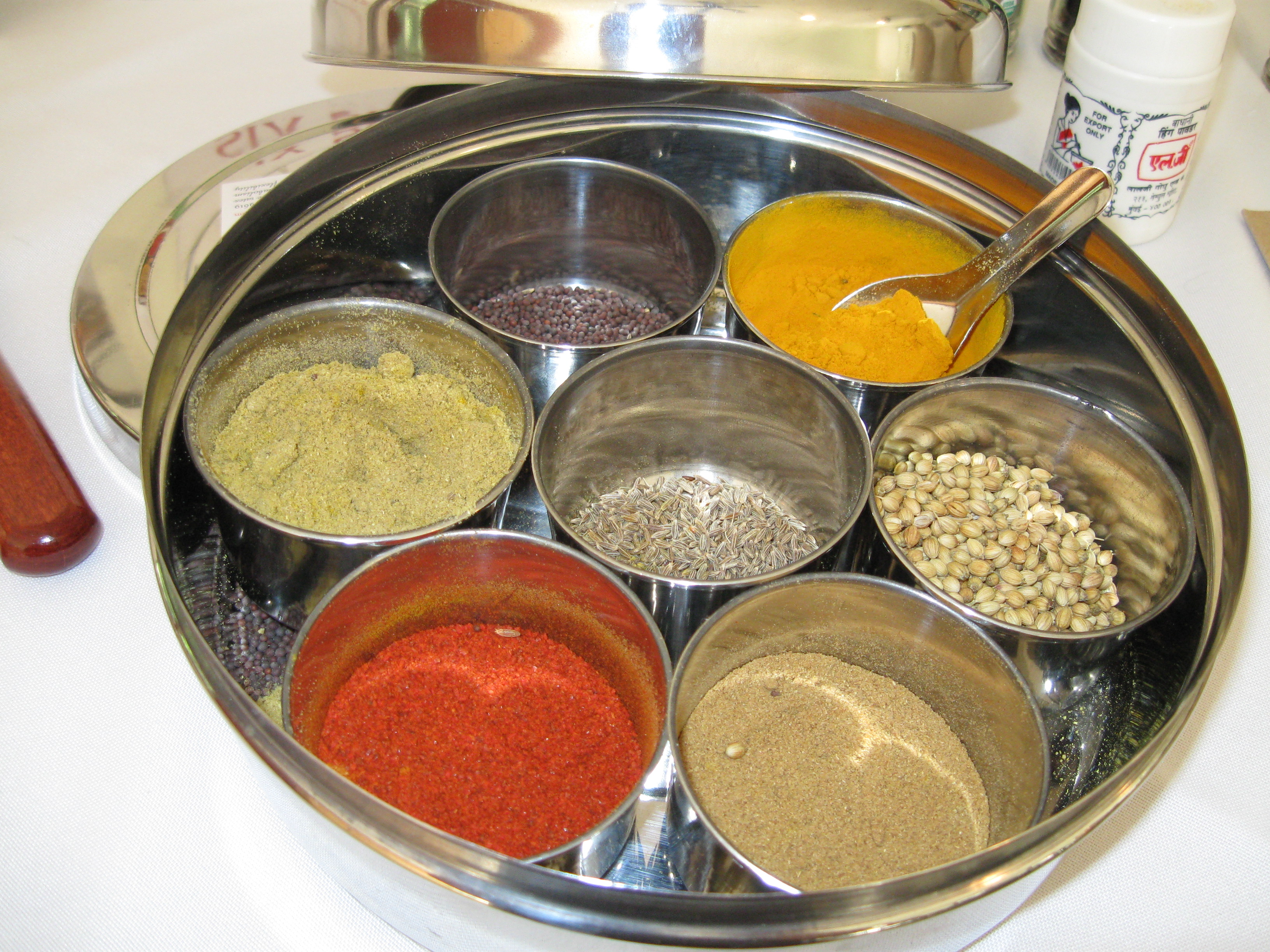
For an alleged food writer, I’ve done a lousy job of posting any actual, like, food content on the blog. Well. No more.
Saturday I sat in on “Indian Cooking in the Heartland,” a class led by Madison-based Neeta Saluja. Author of Six Spices: A Simple Concept of Indian Cooking, Saluja’s on a mission to demystify Indian cuisine. If, like me, you are the kind of person “who looks at an Indian recipe, sees a list of 100 spices, and promptly orders takeout,” her book is for you. Get a grip on six spices,* she says, and you are on your way to masala mastery. As I knew basically nothing about the nuts and bolts of Indian cooking before yesterday afternoon (see above re: “alleged”), I now consider myself an expert.** Here’s what I picked up.
Turmeric: The A-number-one-all-around-most-important Indian spice. Used in all sorts of daily cooking for its earthy-yet-peppery flavor, it’s also an ayurvedic cure-all, believed to remedy ailments from infertility to epilepsy.
Chili: Used in any number of forms (whole, powder, flakes…). The least mysterious. Control the chili content and you control the heat.
Coriander: The seeds of the cilantro plant, coriander is used both whole and as powder in both sweet and savory dishes. Imparts a citrusy flavor, with a nutty backbone. An ayurvedic digestive (and flatulence) aid.
Cumin: Another member of the parsley family, used both whole and ground. Raw seeds are bitter, but toasted or fried they come into their rich, earthy own. Also good for digestion. (Just about everything is good for digestion…)
Mustard seed: You know, mustard. (I was gone for this part; see below.)
Asafetida: Also known as “devil’s dung” and “stinking gum.” The dried and crystallized sap from the stem and roots of yet-another member of the parsley family. Strong and superfunky, it’s kept segregated from the other spices in an airtight container when raw, but cooked it imparts a rich smokiness to dal and ghee and is often added to lentils and beans. Also (all together now) aids in digestion.
Toasted, fresh-ground spices are the best. If you don’t have a spice mill, a hand-held coffee grinder works. Run white rice through it to purge the coffee residue though. (And vice versa). Saluja threw fistfuls of these in a dry saute pan–followed in some order by cashews, ginger, onion, and garlic–and conjured a smell so complicated and tantalizing it bordered on torture. From this base she then produced a nutty lamb korma and, while that braised slowly in the corner of the cooktop, moved on to cauliflower and red potato curry, a mushroom and green pea pilau, eggplant pakora, and mango lassi made with some fantastic goat’s milk yogurt from just south of Green Bay.
All of which beat my current regimen of tuna salad and canned soup without much of a problem.
Coming up Tuesday: The “off-the-grid rock star of Wisconsin’s artisanal cheese movement,” Bleu Mont Dairy’s Willi Lehner. I hope he brings some Select Earth Schmier.
* Yes that looks like SEVEN spices in the picture, but if you look closely you see it’s actually only five, in different guises. From the top, with the spoon: Turmeric, coriander, mustard seed, chili powder, cumin, and mustard seed powder. Those little elongated seeds in the middle, also cumin. Asafetida is the outlier, quarantined in the little white vial just off the turmeric.
** OK my expertise may still be a little suspect, as the price of sitting in on the class was that I also acted as gofer and spent a lot of time running dirty saute pans and bowls of chopped garlic back and forth to the kitchen. Which is in another building. Among other things I basically missed the entire eggplant pakora primer.