The Big Sort
By martha
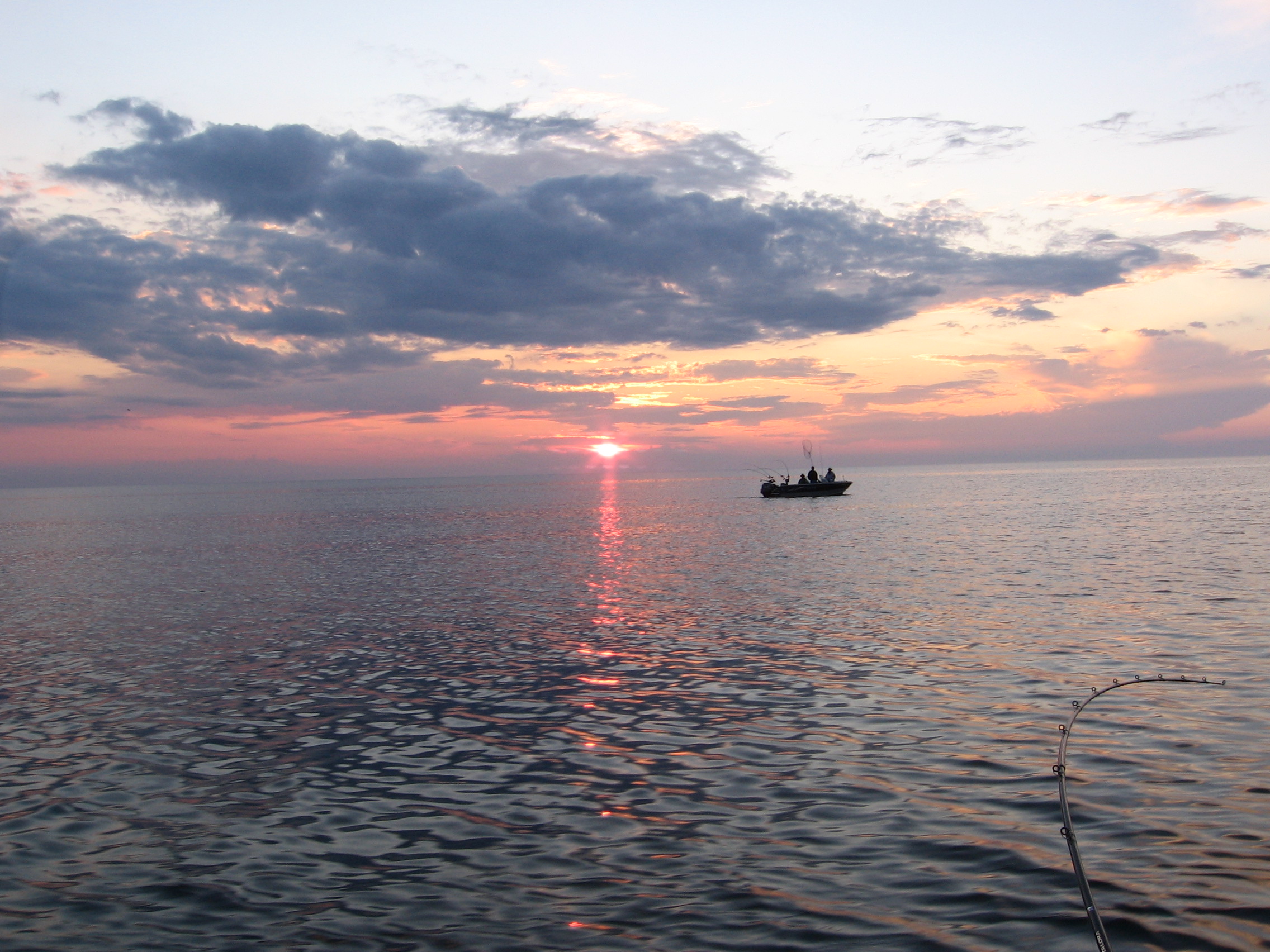
Though the grocery store up here carries both the NYT and the Tribune, I’ve been getting most of my news from Wisconsin Public Radio—its “Ideas Network” station is both more reliably interesting than WBEZ and a good white noise cover when the frogs of sunset get too deafening. I caught this interview with Bill Bishop, author of a book called The Big Sort, one night last week. It may be that I’m a little late to the party—everyone else is already drunk—but I’m adding it to the reading list.
Bishop’s thesis in a nutshell is that, paradoxically, as the United States becomes, year by year, more diverse and pluralistic, individual communities are fast becoming more homogenous, as citizens sort themselves not just by race, class, and creed but by ideology and lifestyle. This is nothing new—American history from the Civil War on down to the red-state/blue-state schism that dominates contemporary debate can be charted as the ongoing clustering, forced and voluntary, of like with like—but it speaks to one of the many points of tension that make Washington Island interesting.*
Locals love the island for its relaxed, rural quality of life. The weather in the summer is an almost clockwork 75 and sunny. The water is Carribean-clear; fields reach gently to the horizon; baby deer bounce along the edge of the woods. Kids can run wild, and if they roll too far afield chances are they’ll run into someone who knows where they live. And people are friendly. Cruise down one of the blacktop roads and it’ll become second nature to lift your wrist from the steering wheel again and again (and again) as passing drivers wave hello.
Most importantly, there’s virtually no crime. Cars and homes are left unlocked, as the gendarmes (all two of them) would invariably catch up with any wannabe burglar or vandal in the line for the 6 o’clock ferry. One person I interviewed last summer described the island, rather emphatically, as “God’s country.” “You don’t have the crap going on up here like you do in Green Bay or those other big cities,” he said, pointing to an anomalous flyer pleading for information on a missing Green Bay teenager. “You’re not gonna have that up here because of that stretch of water.”
Islands, in other words, are nature’s original gated communities: the very real, wet, and cold barrier to entry keeps out those who might idly pass through and cause mischief. But this particular island—once a Potawotami fishing village, then settled by German, Irish, and Icelandic immigrants in the 19th century—is also overwhelmingly white. It voted decisively for Bush in both 2000 and 2004. There are two churches, one Lutheran and one evangelical Christian—though there’s also a sort of freelance Catholic priest. And not only is it white, it’s graying. The mean age is about 50 and it’s not going down anytime soon. The profound dearth of jobs outside of tourism—and the construction of increasingly expensive summer homes—pushes the kids to the mainland one graduating class of nine at a time.
So how does a place like Washington Island thrive in the modern world? How does it open its doors to outsiders when space and resources are limited by the shoreline? How does it both provide jobs and stability for its kids and preserve its quiet, unspoiled, rural character? Where do pluralism and protectionism intersect? Endeavors like the Washington Hotel and Washington Island Brands, designed to channel money back into the island economy, are one small strategy. But the hotel is also the most upscale business this side of Egg Harbor—and increasingly affluent summer traffic is undeniably a factor in the accelerating development of the island. Which threatens the aforementioned quiet, unspoiled, rural character that draws people to the island in the first place.
Can Chicago tourists in search of locally sourced tasting menus and craft beer be part of both the problem and the solution? Hell if I know. But it’s a pretty fascinating question.
*In fact Bishop refers to these ideologically homogenous communities as “island communities.” I need to figure out more what he means by that though. Other than the obvious.
have you caught “calling all pets” on wpr? oh, its a good one.
“calling all pets” is the best. show. ever.
The week we got back to Evanston from Wash. Island, there was a break-in in our ‘hood. This isn’t an infrequent occurrence, and after every instance of petty crime, I’ve been struck by how defiant some of my neighbors are. They refuse to lock the doors of their cars, they say. They refuse to lock their bikes in their own backyards. Being a more recent transplant from Chicago, I’ve been incredulous and impressed by their insistence on living as if the tree-lined streets and laughter of the children at play added up to a security system–or the predictability of a ferry schedule. On the island, I couldn’t make myself leave my keys in the car even when assured everyone else did.
But then last week, the break-in here resulted in a sexual assault on a mom in bed with her kid. In the meetings and discussions that have resulted, there’s been a lot of talk about getting to know all our one’s neighbors. I’ve realized I feel like I know everyone on my block without knowing maybe even most of them. If they’re not part of the walk the dog walk the kids to school crowd, if they’re not outside puttering around the yard of a single-family home, they haven’t crossed my radar. Probably it’s the relative likeness of many of the people that make the others that much more invisible to me.
In Chicago, I don’t recall there being a single most visible group in most of my neighborhoods, but although I had a sense of diversity, I never knew more than a few people on any given block. The police claim knowing your neighbors is a huge crime detriment, which makes sense on a literal island, but I’m not sure why it works that way in a city. And my own stats don’t bear it out. We’ve been broken into twice in neighborly central Evanston; never in anonymous Chicago. And aren’t most rapists someone the woman knows?
Anyway, now the neighbors are talking about going in on a group buy for alarm systems, and lots of us are doing a check every night before we go to bed to make sure we didn’t leave any first floor windows open. Being able to leave the keys in the car never sounded so good. I wonder if next summer we’ll all be locked and alarmed or if people will go back to leaning their bikes against their back porches, forgetting that they’ll probably be stolen if left unlocked.
Also last week, someone remarked to me that when her sister visits from Costa Rica, she’s always surprised to remember that people park their cars on the streets here (here meaning in this country). Apparently that’s asking for trouble in Costa Rica.
Don’t know what this adds up to, but whenever I hear about the Big Sort, I think of Evanston. You can’t swing a dead cat around here without knocking over three Obama signs and a dozen Swiss Sigg bottles. It’s probably part of what made/makes people feel safe. But, you know, the perception is not the reality. I guess perceptions of sameness are more accurate when there’s only 700 or so people to count. But there are more than that, right, with the comings and goings of summer people and weekenders? I wonder if on Wash. Island the community meetings at the Red Barn and the fish fry fundraisers and so forth are attended by full-time residents and part-time residents equally.
Hmm. Not used to posting on blogs. I missed the mark on being short and breezy. Better get my 20th century self back to email.